Broken Garage Door Spring: Repair vs. Full Replacement
Broken garage door spring? Learn when it’s a simple spring replacement, when a full system is justified, and how to spot pushy or unnecessary repair quotes.
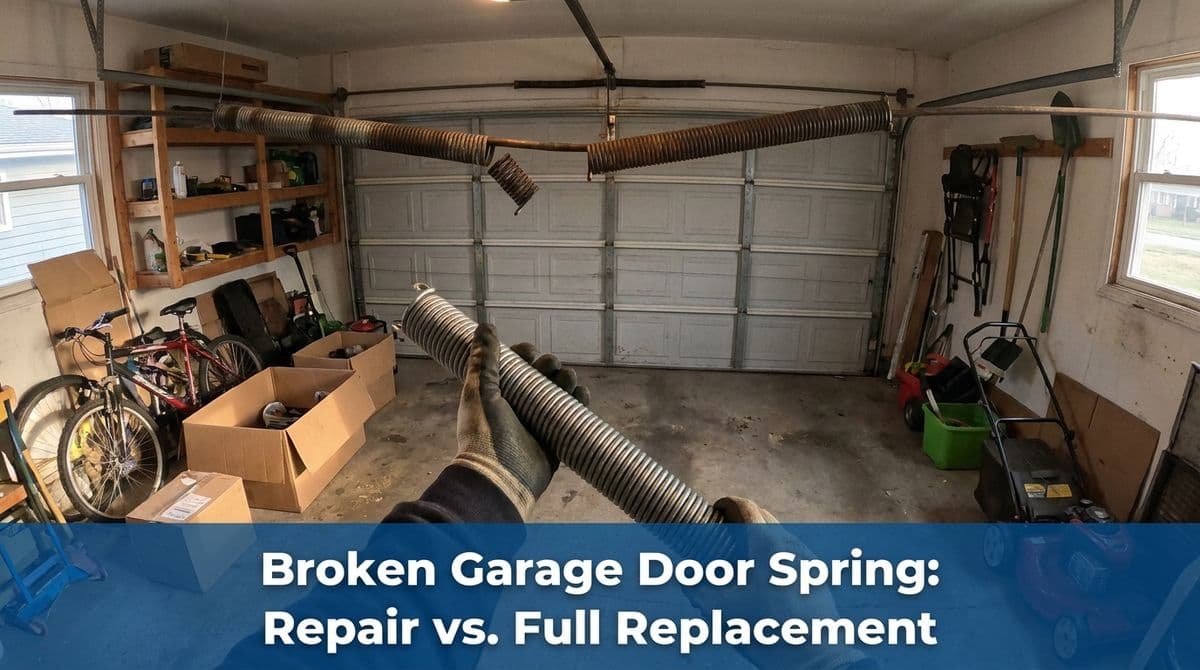
“Do I Really Need a Whole New Garage Door System?”
We recently got a call from a homeowner — let’s call her Lisa — who sounded frustrated and a little suspicious. Her garage door spring had snapped, and the first company she called told her there was “no way to repair it” and she had to replace her whole garage door system.
Lisa said, “No other part of the system broke. I get that it’s old, but I just don’t feel right about that answer. Is a broken spring really not fixable?”
We hear this kind of story more often than we’d like. So we told her what we’ll tell you: in most cases, a broken garage door spring does not mean you need a whole new system. You usually just need the right repair done the right way.
What a Broken Garage Door Spring Usually Means
When we go out on a call for a “broken spring,” here’s what we typically find:
- The torsion spring above the door has snapped in one spot, or
- One of the side extension springs has stretched or broken.
When that happens, the door often:
- Feels suddenly very heavy
- Won’t open at all, or only lifts a few inches
- May have the opener straining, grinding, or stopping partway
That’s all consistent with a normal spring failure — a part that wears out over time and needs to be replaced, just like brake pads on a car. It does not automatically mean the whole door, tracks, and opener are shot.
Can a Broken Spring Be Repaired, or Must It Be Replaced?
When Lisa asked if her spring could be “repaired,” we explained what usually happens. Springs aren’t something we patch or weld; they’re a high-tension part that either works correctly or it doesn’t. Once it breaks, the safe and proper fix is to replace the spring, not try to mend it.
So the honest answer is:
- No, we don’t “repair” a broken spring in place.
- Yes, we can almost always fix your door by replacing the spring (or springs) with the correct size and rating.
That’s a normal repair, not a total system replacement.
When a Whole New System Is Actually Legit
There are times when we recommend more than a spring swap. When we come out to inspect, we look at the whole system and ask a few questions:
- How old is the door and opener? If everything is 25–30+ years old, replacement may be a smarter long-term investment.
- Is the door itself damaged? Severely bent or cracked panels, rotted wood, or twisted tracks can make repair unsafe or unreliable.
- Are multiple major parts failing? If springs, cables, rollers, bearings, and the opener are all near the end of life, a new door and opener can be more cost-effective.
We only call for a full replacement when we genuinely believe:
- The repair will cost a large percentage of a new system, and
- The remaining components are so worn that you’ll just be chasing breakdowns.
In Lisa’s case, based on what she described — one broken spring and otherwise normal operation — we told her it sounded like a straightforward repair, not a mandatory system replacement. We still wanted to see it in person, of course, before giving a final answer.
Typical Lifespan of Garage Door Springs
One thing we shared with Lisa (and most homeowners don’t realize) is that springs are rated in cycles, not years. One “cycle” is one full open and close of your garage door.
- Standard torsion springs: about 10,000 cycles
- Upgraded high-cycle springs: often 20,000–30,000 cycles or more
If you use your garage door like a front door — say 8–10 cycles a day — that standard spring may only last around 3–5 years. If you only use it a couple of times per day, you might see 8–12 years out of it. When we inspect, we can talk through whether an upgraded spring makes sense for your household.
How to Describe Your Garage Door Problem on the Phone
Lisa did a great job explaining why she was uncomfortable with the first company’s recommendation, and that helped us know what to look for. When you call us about a possible spring issue, here’s the information that really helps:
- What happened when it stopped working? Did it bang loudly? Did it stop halfway? Did you find a gap in the spring?
- Can you see the spring? If you’re comfortable looking, is the torsion spring above the door clearly broken in two?
- Door behavior now: Won’t open at all, opens a few inches then stops, or only works if you “help” it?
- Any recent changes: New opener, new cables, or any recent hits to the door (backed into it, etc.).
You don’t need to diagnose it yourself — that’s our job. But these details help us arrive prepared and also give you a realistic idea of whether we’re talking about a likely repair or a potential replacement.
What We Look For During a Spring Service Call
When we told Lisa we’d come take a look, we explained that we don’t just glance at the spring and call it a day. On a typical spring call, we:
- Confirm the failure — identify the broken or dangerously worn spring.
- Check cables and drums — frayed cables or damaged drums can be a safety hazard if ignored.
- Inspect rollers and hinges — worn rollers or hinges add stress to the system and can shorten spring life.
- Assess the opener — make sure the motor hasn’t been damaged by trying to lift a dead-weight door.
- Evaluate the door itself — look for sagging, cracks, or warping that might justify talking about replacement.
Then we give you clear options: what must be done for safety, what we recommend for reliability, and what can reasonably wait.
Simple Maintenance Tips to Extend Spring Life
We never expect homeowners to do their own spring work — these parts are under serious tension and can be dangerous. But there are a few safe things you can do to help your springs and the rest of the system last longer:
- Lubricate moving parts 1–2 times a year with a garage door lubricant (not WD-40): springs, rollers, and hinges.
- Listen for changes — new grinding, popping, or screeching noises can be early warning signs.
- Do a balance check (with the opener disconnected) once or twice a year and let us know if the door wants to slam shut or fly open.
- Stop using the opener if you suspect a spring is broken — forcing it can burn out the motor or damage the door.
Those small steps help your entire system work more smoothly and can stretch the life of your springs.
How to Tell If You’re Getting an Honest Recommendation
Lisa’s gut told her something wasn’t right about being pushed straight to a full replacement, and she did the smartest thing: she got another opinion. When you’re unsure if a company is being fair, ask yourself:
- Did they actually inspect the door and opener, or just glance and quote a replacement?
- Can they explain why repair isn’t safe or cost-effective in your specific case?
- Are they willing to separate “must-do” safety items from optional upgrades?
- Do they answer your questions in plain language, without pressure?
An honest garage door company should have no problem walking you through what they see and giving you clear choices, whether that’s a simple spring replacement or a full new door when it truly makes sense.
Need a Second Opinion on a “You Need Everything New” Quote?
If you’ve been told that a broken spring means you have to buy a whole new system, we’re happy to come out, take a real look, and let you know what’s actually going on. Many times, like in Lisa’s situation, it turns out to be a straightforward repair that gets your door working safely again without replacing everything you own.
Have your basic details ready — what the door is doing, roughly how old it is, and whether anyone has worked on it recently — and we’ll take it from there.