How to Choose a New Garage Door for an Older Home or Shop
Replacing an old garage door on an older home or shop? Learn how to choose the right size, material, insulation, and opener options for everyday use.
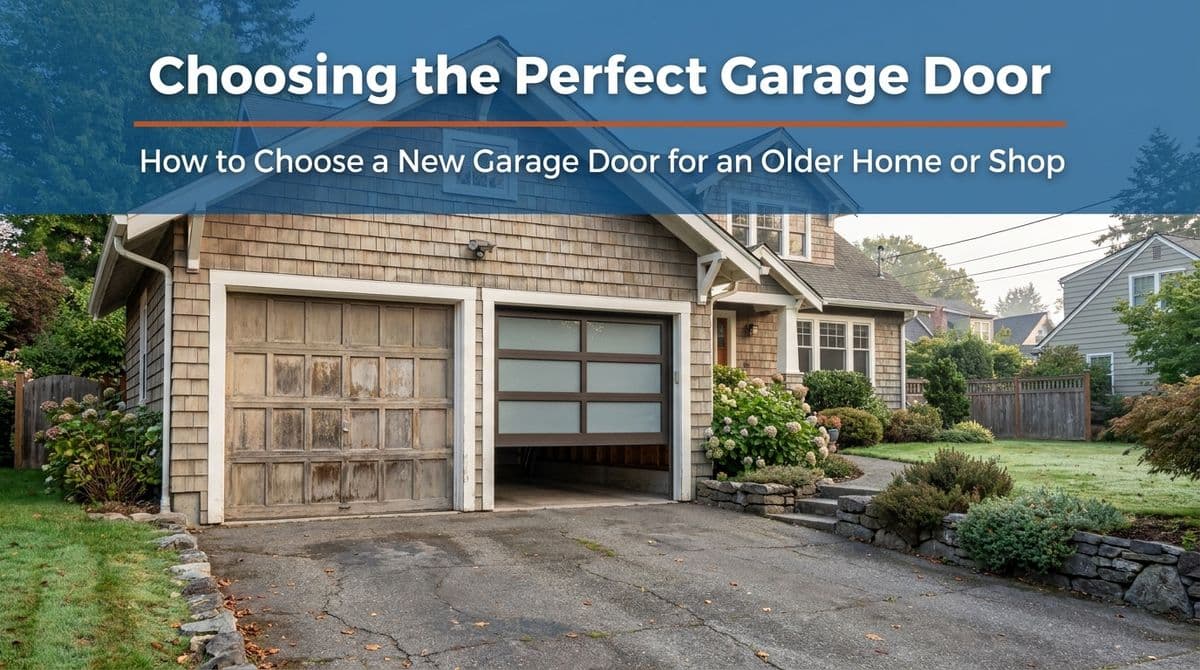
A recent call about an old wood garage door
We recently got a call from a homeowner — let’s call him Mark — who had an old white wooden garage door on the side of his house. It was about 8 feet wide by 7 feet tall, with an opener and motor that were probably from the 1960s or 70s. The door was on a wood jamb, and it served as the entrance to his side shop.
Mark told our team he uses that shop a lot and wanted a new door with a keypad and opener so he could get in and out easily. But like a lot of homeowners with older homes or shops, he wasn’t sure what size, material, or insulation he needed — or what his opener options really were. He just wanted a clear quote before anyone came out.
We walked Mark through his choices over the phone, and since we hear these same questions all the time, our team thought we’d lay out the basics here for anyone trying to choose a new garage door for an older home or shop.
Step one: Confirming the right garage door size
Mark already knew his door size: 8 feet wide by 7 feet tall, which is common on older homes and side shops. If you’re not sure about your size, we always recommend measuring carefully before you start shopping.
Here’s how our technicians suggest you measure:
- Width: Inside opening, left jamb to right jamb.
- Height: Floor to bottom of the header.
- Headroom: From top of the opening to the ceiling or lowest obstruction.
- Side room: From each side of the opening to the nearest wall or obstruction.
For many older homes and shops, standard sizes like 8x7, 9x7, and 16x7 are common, but we do see odd sizes. When measurements are unusual, our team will talk through whether a custom door or minor framing changes make more sense.
Choosing materials: Wood vs. steel vs. other options
Mark’s existing door was an old wooden white door. That’s something we run into a lot on homes built several decades ago. While wood has a classic look, modern doors offer more options that are lower-maintenance and better insulated.
Here’s how our technicians usually break it down:
- Steel doors
Most popular today. Durable, lower maintenance, and available in many styles and colors (white, almond, sandstone, and more). Great for shops and attached garages. - Wood doors
Beautiful and traditional, but they require regular painting or staining and can warp or rot over time, especially on older homes where weather exposure is significant. - Composite/faux wood doors
Look like wood but built over steel or composite frames, giving you the appearance without as much upkeep.
For a side shop like Mark’s, our team typically recommends a steel insulated door in a color that matches the house trim. It’s a good balance of durability, security, and cost.
Insulated vs. non-insulated: What makes sense for a shop?
One of the first questions we asked Mark was whether his current door was insulated. Like a lot of folks, he wasn’t sure — he knew it had seals on the bottom, but that doesn’t always mean the door itself is insulated.
Here’s how we help customers decide between insulated and non-insulated doors for older homes or shops:
- Choose insulated if:
- You use the space as a shop, hobby room, workout room, or office.
- You go in and out a lot and want to keep the temperature more stable.
- The garage or shop is attached to your house (to reduce drafts and noise).
- Non-insulated can work if:
- It’s a detached shed or outbuilding used mostly for storage.
- You’re in a mild climate and comfort isn’t a big concern.
- You’re focused on the lowest upfront cost.
On older homes, upgrading from a thin wood or non-insulated metal door to an insulated steel door can make a big difference in comfort, especially for anyone like Mark who’s in and out of a side shop all day.
Garage door openers and keypads for older doors
Mark mentioned his opener motor was probably from the 1960s or 70s and that he wanted a keypad and a garage door opener he could rely on. That’s very common with older homes — the door might still move, but the opener is loud, unreliable, or missing modern safety features.
When our team talks opener options with homeowners, we usually cover:
- Drive type
- Belt drive: Quieter, great for attached garages near living spaces.
- Chain drive: A bit louder but very durable and budget-friendly, often fine for shops and detached areas.
- Wall-mount (jackshaft): Mounts beside the door, ideal when ceiling space is limited or cluttered.
- Keypad and remote options
- Exterior keypads for easy in-and-out access without a key.
- Multiple remotes for vehicles or shared access.
- Smartphone control on some models for remote monitoring and operation.
- Safety and security
- Modern photo eyes that reverse the door if something is in the way.
- Rolling-code technology to help prevent code grabbing.
For a side shop like Mark’s, we often recommend a solid chain-drive or belt-drive opener with a keypad, depending on how close the space is to living areas and how quiet the homeowner wants it to be.
Getting a quote for your older home or shop door
Like Mark, many people with older homes or shops want a ballpark quote before scheduling a visit. To get you the most accurate estimate, our team usually asks for:
- Door size (width and height, like Mark’s 8x7).
- Whether it’s on a house, shop, or metal building.
- Wood or metal jambs and any visible damage.
- Your preference for insulated vs. non-insulated.
- Opener needs: keypad, remotes, smart options, etc.
Once we see the door in person, we confirm all measurements, check the condition of the jambs and tracks, and make sure your opener and keypad setup will work safely with the new door.
If you’re staring at an old wooden door and a vintage opener and wondering what to do next, our team is always happy to walk you through sizes, materials, insulation, and opener options so you end up with a setup that fits your older home or shop — and the way you actually use it.