Garage Door Off Track and Out of Alignment: Causes, Risks, Fixes
Garage door leaning or off track? Learn causes, risks, DIY checks, and when it’s time to stop using the door and call a professional for safe repair.
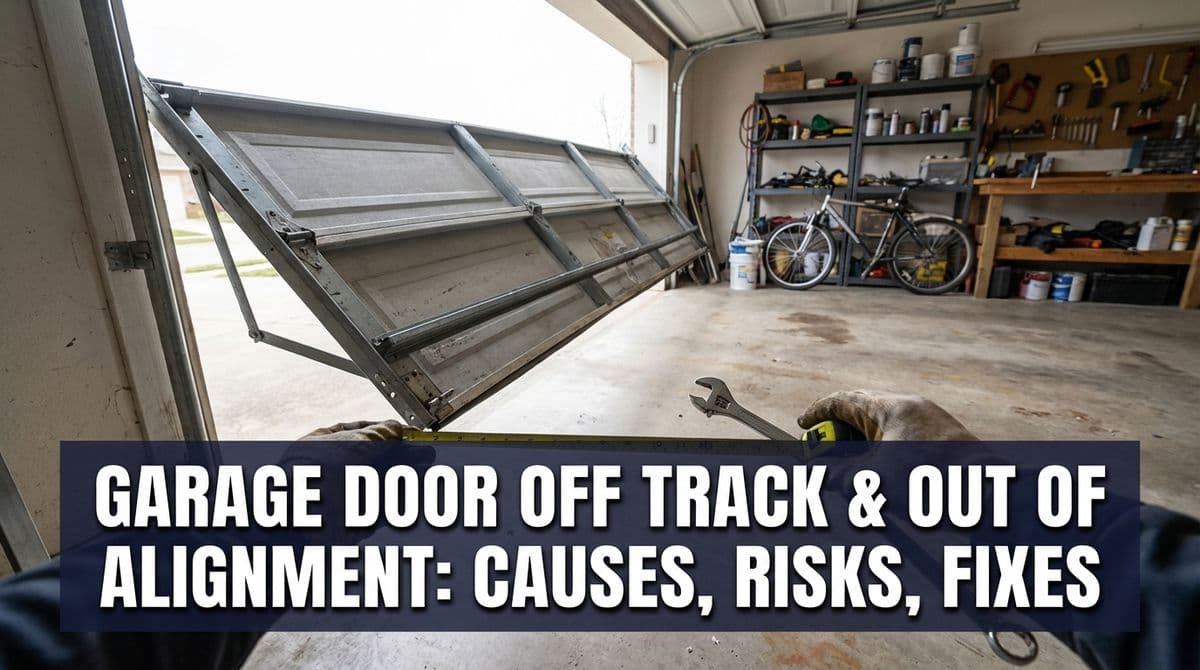
When a Garage Door Jumps the Track: A Real-World Example
We recently got a call from a homeowner — let’s call her Linda — who was worried about her garage door being off track and clearly out of alignment. She told us the door was old, one of the little bracket pieces had come off the track, and the whole door was now leaning to one side with a bigger gap at the bottom on one corner.
Linda mentioned that this had happened before. In the past, she could usually find the loose metal piece, snap it back where she thought it belonged, and get the door moving again — even though it stayed very loud and rough. This time, she couldn’t even find the missing part, and the door looked obviously crooked.
We scheduled a visit a bit out, but before we come to any home, we like to walk customers through what might be going on and what they should (and shouldn’t) do in the meantime. Linda’s situation is something we see all the time: a garage door off track and out of alignment that’s quietly turned from a nuisance into a real safety risk.
Why Garage Doors Go Off Track or Out of Alignment
Your garage door rides on metal tracks using rollers and brackets. When everything is aligned, it should move smoothly with a steady sound, not banging or grinding. Over time, several issues can push things out of line, just like what Linda described:
- Worn or broken rollers and brackets – The “little bracket things” Linda mentioned are typically the hinges and roller brackets that hold the rollers in the track. When they loosen, bend, or break, the roller can slip out of the track.
- Loose or bent tracks – Tracks can get bumped by a car, lawn equipment, or even kids’ bikes. When they’re bent or pulled away from the wall, the door starts to drag or jump the track.
- Unbalanced or aging springs – If the springs are old or out of balance, the door weight isn’t distributed evenly. One side pulls harder than the other, causing the door to lean and bind.
- Old hardware – On older doors, metal fatigues. Bolts loosen, hinges crack, and the whole system slowly drifts out of alignment.
In Linda’s case, the age of the door combined with missing hardware and a visible lean told us there was more going on than a small adjustment. That’s exactly when a professional inspection is worth it.
Red Flags: Signs Your Garage Door Is Off Track
If you’re seeing what Linda described, your door is trying to tell you something. Here are some common warning signs:
- Door looks crooked or leans to one side – One side is lower or the bottom gap is uneven.
- Rollers visibly out of the track – You can see a wheel hanging outside or barely riding the rail.
- Loud, banging, or grinding noises – Much louder than normal when opening or closing.
- Door stops, jerks, or binds mid-travel – The opener strains, hesitates, or reverses unexpectedly.
- Gaps around the door – Especially at the bottom or along one side, where air, light, or pests can get in.
Any one of these on its own is worth checking. A combination — like loud operation and a visible lean — should be treated as urgent.
Why a Misaligned or Off-Track Door Is Dangerous
A lot of homeowners, like Linda, try to “nurse” an old door along by nudging parts back into place. We understand the temptation, but a garage door that’s off track is more than an inconvenience:
- Risk of the door falling – A heavy door that’s not properly supported on its tracks can drop suddenly, damaging vehicles or injuring someone standing nearby.
- Strain on the opener – The opener is designed to move a balanced door. When the door is dragging or twisted, the motor and gears can burn out.
- Damage spreads – One missing or bent bracket can lead to twisted tracks, cracked panels, and broken springs if the door is forced to run.
- Security & weather issues – A door that doesn’t close evenly is easier to pry open and lets in water, dirt, and pests.
For Linda, the safest move was to stop using the door altogether until we could inspect it — and that’s usually what we advise when a door is clearly leaning or a roller is completely out of the track.
What You Can Safely Check Yourself
There are a few simple things you can look at without getting into the danger zones of springs and high-tension parts:
- Visual inspection – With the door closed, look at both tracks, the rollers, and the hinges. You’re checking for anything obvious: bent metal, missing bolts, or a roller that’s not seated in the track.
- Listen closely – If the door still operates, stand back and listen. Grinding or popping sounds are clear signs something’s off.
- Clean the tracks – You can safely wipe out dirt and debris from the tracks with a dry cloth. Don’t use heavy grease — it attracts more grime.
What we don’t recommend is trying to bend tracks back by hand, remove springs, or force rollers back in with the door under tension. That’s where injuries happen fast.
When to Call a Professional (and Stop Using the Door)
We told Linda what we tell most homeowners: if you see any of the following, it’s time to stop operating the door and call a pro:
- The door is visibly leaning, twisted, or one side sits higher than the other.
- A roller or bracket is completely off the track.
- You hear loud bangs, grinding, or the door shakes when moving.
- The opener strains, hums, or fails to move the door.
- A piece of hardware has gone missing and you’re not sure where it came from.
Until a technician arrives, keep people, pets, and vehicles clear of the door and consider disconnecting the opener so no one accidentally tries to use it.
Repair vs. Replace: What We Look At
Many homeowners with older doors, like Linda, want to know whether it’s worth fixing or if they should go ahead and replace the whole system. Here’s what we usually consider on site:
- Age of the door and opener – Doors and openers over 15–20 years old may be better candidates for replacement if multiple parts are failing.
- Extent of the damage – A couple of worn rollers or a loose bracket are typically simple repairs. Twisted tracks, cracked panels, and broken springs together can tip the scale toward replacement.
- Safety and reliability – If we can restore the door to safe, dependable operation with reasonable repairs, we’ll outline that option clearly.
- Future costs – Sometimes a major repair on an old door just delays the inevitable. We’ll walk you through expected future maintenance so you can make an informed choice.
In every case, we explain the options, share ballpark price ranges for both repair and replacement, and let you decide what fits your budget and plans for the home.
Simple Maintenance to Prevent Off-Track Problems
While you can’t prevent every issue, a bit of routine care goes a long way toward keeping your door aligned and running smoothly:
- Inspect hardware twice a year – With the door closed, look over hinges, brackets, and tracks. If you see loose bolts, light tightening with a hand tool is usually safe. If anything looks bent or cracked, call a pro.
- Lubricate moving parts – Once or twice a year, use a garage-door-safe lubricant on hinges, rollers (if they’re metal), and springs. Avoid grease in the tracks themselves.
- Keep the area clear – Don’t store items where they can bump or press on the tracks. Even a small bend can start a chain reaction.
- Schedule a professional tune-up – A yearly or every-other-year inspection lets us catch small issues — like slightly unbalanced springs or loose brackets — before they turn into off-track emergencies.
Worried Your Garage Door Is Off Track?
If your garage door looks like Linda’s did — leaning, noisy, or missing parts — the safest thing you can do is pause use and have it checked. We’re always happy to take a look at photos first, explain what might be happening, and then come out to get everything back on track, aligned, and operating safely again.
You shouldn’t have to wonder if your garage door is going to cooperate today. With the right diagnosis and a proper repair, it’ll be one less thing you have to think about every time you leave the house.