Garage Door Spring Broken? What to Do Next Safely
Garage door spring broken? Learn what to do next, key safety tips, how long springs last, and why replacing both springs is usually your best bet.
When a Garage Door Spring Snaps Out of Nowhere
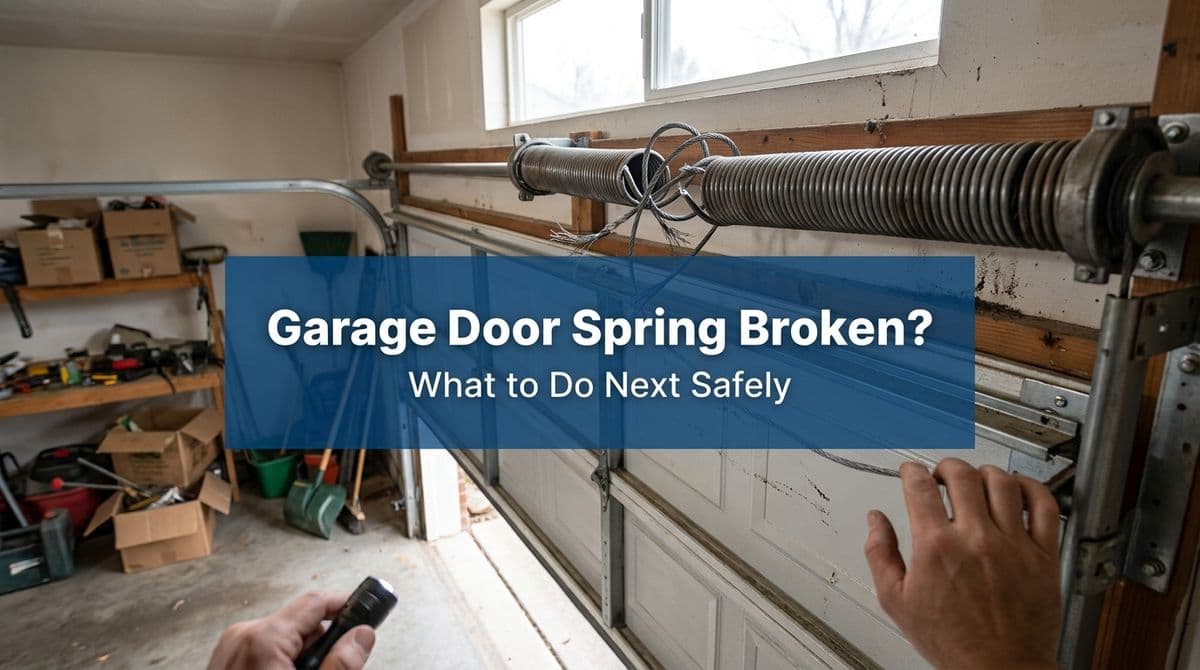
We recently got a call from a homeowner — let’s call him Mark — who was dealing with a garage door that would only open halfway. He told us it started the day before, and after doing a little online research and taking a look himself, he realized one of his two torsion springs had snapped.
Mark had already pulled the emergency release cord so he could open the door manually, but he was worried about damaging something or making the problem worse. He also asked a smart question we hear a lot: if only one spring is broken, do I really need to replace both?
Our conversation with Mark is a great example of what most homeowners run into when a spring breaks, so let’s walk through what to do next, how to stay safe, and why we almost always recommend replacing both springs at the same time.
First Things First: Is It Really a Broken Spring?
Most of the time, if your garage door only opens a foot or two and stops, or it feels suddenly very heavy when you try to lift it manually, you’re dealing with a broken spring. On Mark’s door, one of the two torsion springs above the door had a clean break in the coil.
Here are common signs your spring has failed:
- The door only opens partway, then stops or reverses.
- You hear a loud bang in the garage, but nothing looks obviously damaged until you look up at the spring.
- The opener runs, but the door barely moves or doesn’t lift at all.
- You see a visible gap or separation in the torsion spring above the door.
If you see or suspect a broken spring, treat the door as unsafe to operate until it’s inspected or repaired.
Safety Tips: What to Do (and Not Do) Right Away
On the phone with Mark, we gave him the same advice we give everyone with a broken spring: the opener is not designed to lift the full weight of the door by itself. With the spring broken, your opener can be damaged very quickly.
Here’s what we recommend:
- Stop using the automatic opener. Don’t keep pressing the button hoping it will “catch.” You can burn out the motor or strip gears.
- If you must move the door, use the emergency release cord. This disconnects the opener so you can operate the door manually, like Mark did.
- Only lift the door a little, and don’t raise it fully overhead. With one spring broken, the cables can slip off the drums if the balance is too far off, leaving your door stuck or crooked.
- Never try to unwind or remove torsion springs yourself. Those springs are under heavy tension; a wrong move can cause serious injury.
It’s okay to carefully lift the door enough to get a car in or out in an emergency, but go slow, keep hands and feet clear of the tracks, and don’t force anything. If the door feels too heavy or binds, stop and wait for a technician.
Why We Recommend Replacing Both Springs
Mark had already done his homework and compared his springs to car brakes: you don’t just replace one side and ignore the other. We couldn’t agree more.
If your door has two torsion springs and one snaps, the other is almost always the same age and has the same amount of wear. It may not be far behind. Here’s why we usually recommend replacing both:
- Even wear and balance: Two brand-new, matched springs keep your door balanced and reduce strain on your opener.
- Fewer repeat service calls: Replacing both now helps you avoid another breakdown (and another trip charge) when the second spring fails.
- Better long-term value: The additional parts cost is usually small compared to the cost and hassle of a second repair visit.
There are rare situations where it might make sense to replace only one, but in most typical residential setups, doing both at once is the smarter, safer choice.
How Long Do Garage Door Springs Last?
Mark mentioned this was the first time his door had ever given him trouble. That’s common — springs often work perfectly for years, then suddenly snap with no warning.
Most standard torsion springs are rated for a certain number of “cycles” (one open and close is one cycle). For many homes, that’s in the range of 10,000–20,000 cycles. Depending on how often you use your garage door, that might translate to:
- Light use: 1–2 times a day – springs may last 10–15+ years.
- Average use: 3–5 times a day – often 7–10 years.
- Heavy use: 6+ times a day – sometimes closer to 5–7 years.
Signs your springs are wearing out (before they snap) can include:
- The door feels heavier than it used to when lifting manually.
- The opener seems to struggle, move slower, or make more noise.
- The door doesn’t stay in place when you stop it halfway; it drifts down or shoots up.
If you notice any of these changes, it’s a good idea to schedule an inspection before the spring fails completely.
What Affects the Cost of Spring Replacement?
On our call with Mark, we talked through a ballpark price and also why costs can vary from home to home. While we don’t want to lock anything in without seeing your setup, here are the main factors that influence pricing:
- Door size and weight: Heavier doors (wood, insulated steel, or extra-tall doors) need larger or higher-cycle springs.
- Number and type of springs: Single-spring systems are different from two-spring torsion systems or extension springs.
- Condition of related hardware: If cables, bearings, drums, or center bearings are worn or damaged, it may be wise to address those at the same time.
- Labor and travel: Distance, access, and how your door is installed all affect the time it takes to do the job safely.
When we quote a repair, our goal is to give you an honest, clear picture of what’s needed so you’re not surprised later.
Simple Maintenance and Prevention Tips
You can’t completely prevent a spring from ever breaking, but you can catch issues earlier and help everything run more smoothly. Here’s what we recommend homeowners do a couple of times a year:
- Visual inspection: With the door closed, look at the springs, cables, and rollers. If you see frayed cables, severe rust, or gaps in the coils, call for service.
- Listen to your door: New grinding, popping, or screeching sounds usually mean something needs attention.
- Lubricate moving parts: Use a garage-door-safe lubricant on springs, hinges, and rollers (avoid getting lubricant on the tracks themselves). This reduces friction and noise.
- Test the balance (safely): With the opener disconnected and the door closed, lift the door manually to about waist height and let go carefully. If it slams down or shoots up, the spring tension may be off — call a pro.
What you should not do is attempt to adjust spring tension yourself. Leave that part to someone with the right tools and training.
When to Call a Professional
In Mark’s case, we were booked solid and talked through some options and referrals so he wouldn’t be stuck without a working door. Whether we’re the ones who come out or another reputable company does, the key is getting a qualified technician to handle the spring work.
If your garage door spring is broken, remember:
- Stop using the opener right away.
- Use the emergency release and operate the door manually only if you must — and don’t raise it all the way up.
- Plan on replacing both springs if your system uses a pair.
- Schedule professional service as soon as you can.
If you’re dealing with a stubborn, half-open door like Mark was, or you’re not sure whether your spring is actually broken, feel free to reach out. We’re always happy to walk you through what you’re seeing and help you figure out the safest next step for your home and your garage door.