Garage Door Spring Failure & Motor Damage: Repair Guide
Broken garage door spring and worried about motor damage? Learn how to tell what’s really wrong and how landlords and homeowners should plan repairs.
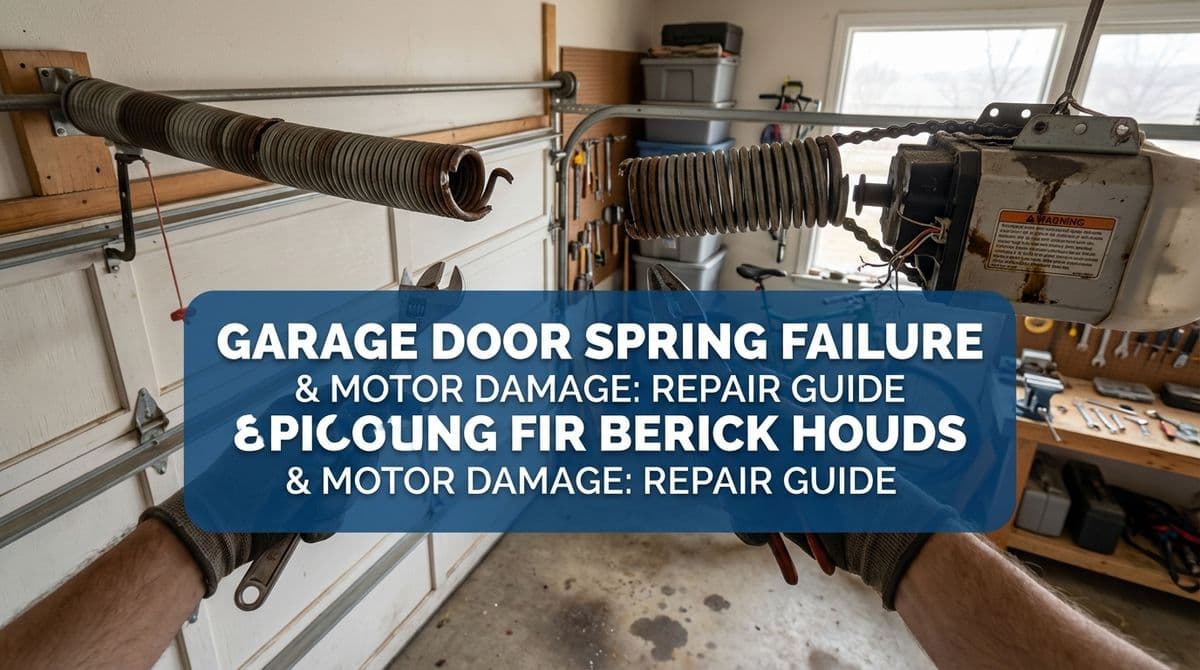
When a “Simple” Broken Spring Might Take Out Your Garage Door Motor
We recently got a call from a landlord — let’s call him Mark — who owns a rental house here in town. His tenants told him the garage door stopped working, and he suspected a broken spring and was worried it had ruined the motor too.
Mark’s situation is one we see all the time, especially with landlords who aren’t on-site when something breaks. The tenant just knows, “The door won’t open,” and the owner is left trying to make smart decisions from a distance: Do we replace the spring only? The motor and the spring? Is it safe to leave as-is for a few days? How do we schedule around the tenant’s availability?
Let me walk you through how we think about calls like Mark’s, and what both homeowners and landlords should know before scheduling garage door spring and motor repairs.
How a Broken Garage Door Spring Can Affect the Motor
When Mark called, he said, “I think it’s got a broken spring and probably ruined the motor too.” That’s a very common fear, and sometimes it’s justified — but not always.
Your garage door springs do the heavy lifting. The motor (the opener) is really just a guide and a helper. When a spring breaks, the door suddenly becomes much heavier. If someone keeps trying to run the opener with a broken spring, a few things can happen:
- Overworked motor: The opener strains to lift a door that’s now too heavy.
- Stripped gears or trolley: Plastic gears inside some openers can strip, or the trolley can be damaged.
- Burnt-out motor: In the worst case, the motor overheats and fails.
That’s why we always tell people: if you suspect a broken spring, stop using the opener immediately. Try not to “just hit the button one more time” — that’s what usually finishes off a motor that could have been saved.
Signs You Have a Broken Spring vs. a Bad Motor
On the phone with Mark, we didn’t have eyes on the door yet, so we had to talk in ballpark terms. Here are some simple checks you or your tenant can do to give us better information before we arrive:
Signs of a Broken Spring
- Loud “bang” from the garage, like something snapped.
- Door suddenly won’t open, even though the opener tries.
- Visible gap in the torsion spring above the door, or an extension spring hanging loose on the sides.
- Door feels extremely heavy or won’t budge when you try to lift it manually.
Signs the Motor May Be Damaged
- Opener hums but the door doesn’t move.
- You hear the motor run, but the chain or belt doesn’t move the door.
- Burnt plastic smell from the opener housing.
- Opener lights come on, but there’s no response or repeated clicking.
You don’t need to diagnose everything perfectly — that’s our job — but sharing what you see and hear helps us give you more accurate expectations on the phone.
Should You Replace Just the Spring, or the Motor Too?
One thing Mark said that I hear often was, “I don’t think it makes any sense to fix the spring if the motor’s shot too.” In some cases he’s absolutely right: if the opener is clearly burned out, it’s smarter to handle both at once.
But there are a few things to consider first:
1. Age of the Motor
If your opener is 15–20 years old and has been struggling, a broken spring event might just be the final straw. In that case, we often recommend replacing the opener while we’re there doing the spring.
If the opener is newer and has worked well up until the spring failure, there’s a good chance it survived just fine, especially if no one kept trying to run it with the broken spring.
2. Safety and Convenience
When Mark questioned fixing just the spring, we pointed out a key benefit: with a new spring, you can safely raise and lower the door by hand, even if the opener ends up needing replacement.
That can be a big deal for tenants or families who need access to the garage, especially if they keep a car in there. A working spring makes the door balanced and much easier to operate manually until the opener work can be scheduled.
3. Budget and Timing
With Mark, we gave rough numbers (yours may differ, but the idea is the same): one price for the spring, a separate price for a new motor. That let him decide whether to:
- Fix the spring now so the door is usable by hand.
- Plan to add the motor replacement when scheduling allows.
- Wait and do both together if timing and access line up.
As a landlord, you may also be balancing tenant schedules. In Mark’s case, the tenant had certain afternoons open and was busy the rest of the week. We work around that as best we can, but sometimes doing the repair in two stages (spring now, motor later) is the most practical option.
Special Considerations for Landlords
Owning a rental adds a few wrinkles that homeowners don’t always deal with. When we work with landlords like Mark, here’s what we recommend:
- Get basic details from the tenant: What happened? When did it stop working? Any loud noises? Is a car trapped inside?
- Confirm availability windows: Ask your tenant for specific days and times they’re regularly home. Share that with us up front.
- Clarify approval limits: Let us know your budget range and whether you want a call before we proceed with anything beyond the spring.
- Plan for communication: We can coordinate with you by phone or text and schedule directly with the tenant if you prefer.
That way, you’re not stuck playing phone tag between your tenant and the garage door tech, and repairs get done faster.
What to Do Right After a Spring Failure
Whether you’re a homeowner or a landlord, here’s the quick action plan:
- Stop using the opener. Unplug it if needed so no one accidentally hits the wall button or remote.
- Don’t try to lift a stuck door alone. A door with a broken spring can be dangerously heavy. If you must move it, have at least two adults and be very careful.
- Take a quick photo of the spring area and opener. Send that to your garage door company if they offer text-based estimates; it helps us see what we’re dealing with.
- Call a pro promptly. Springs are under high tension and can cause serious injury if handled without the right tools and training.
Need Help Sorting Out Spring vs. Motor Damage?
If you’re in a situation like Mark’s — managing a rental from across town or just trying to figure out whether you’re looking at a spring repair, a motor replacement, or both — we’re happy to walk you through the options.
We can usually get springs handled quickly so the door is safe and usable, then schedule the opener replacement on a day that works for everyone. And if the motor turns out to be fine, you’ll know you didn’t replace it unnecessarily.
If your door just failed and you’re worried the motor might be next, reach out and we’ll help you make a plan that fits your schedule, your budget, and your tenants’ needs.