Insulated vs. Non‑Insulated 9x7 Garage Doors: How to Choose
Choosing between insulated and non-insulated 9x7 garage doors? Learn how insulation, style, color, and lead-time all impact comfort, cost, and convenience.
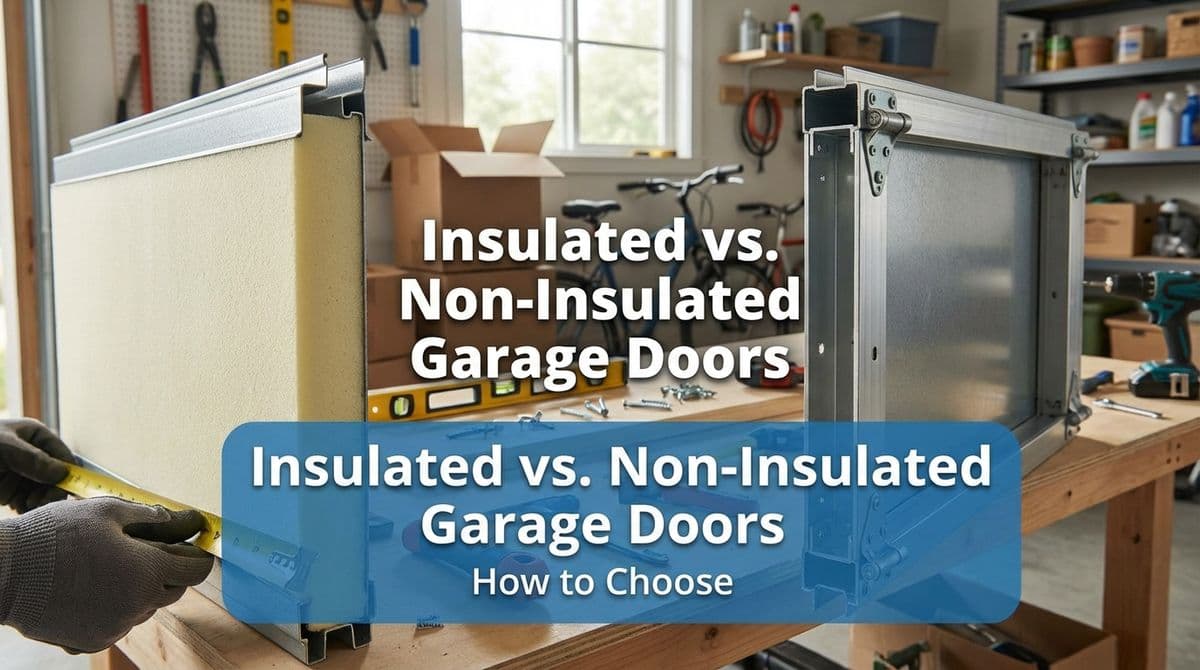
Helping a Homeowner Choose the Right 9x7 Garage Door
We recently got a call from a homeowner — let’s call him Mike — who needed a 9x7 garage door as soon as possible. He’d already ordered a door from a big-box store back in December, and months later… still no door.
Mike asked if we sold garage doors for pickup, and he knew exactly what he wanted: a 9x7, straight overhead, no windows, no opener — just the door and tracks. He also said, “Preferably if it was insulated, that would be awesome.”
That quick conversation turned into a great example of how to choose between insulated vs. non-insulated doors, and how style, color, and lead-time all factor into the decision — especially for a common size like a 9x7.
Insulated vs. Non‑Insulated: What’s Really the Difference?
When Mike called, we told him what we tell most homeowners: we carry both insulated and non‑insulated 9x7 doors. His first question (and probably yours) was basically, “Which one should I get?”
Here’s how we break it down on calls like his:
- Non‑insulated doors
These are typically single-layer steel (or sometimes thinner material). They’re the most budget-friendly option and work fine if the garage is purely storage and you don’t care about temperature or noise. - Insulated doors
These are usually multi-layer doors with insulation sandwiched in between (polystyrene or polyurethane). They’re sturdier, quieter, and help control temperature better.
For a standard 9x7, an insulated door can make a big difference if:
- Your garage is attached to the house.
- You use the garage as a workshop, gym, or hobby space.
- You have a bedroom or living space above or next to the garage.
- You want to reduce street noise and door vibration.
In Mike’s case, as soon as he heard we had both, he said right away, “I would take an insulated.” He already knew he wanted the comfort and durability benefits.
How Much More Does Insulation Cost?
Another thing Mike asked us about was price — especially when we told him we had his size in stock in two colors: white and almond.
“Is there a price difference on that?” he asked.
For the specific insulated models we had in stock that day, the answer was simple: “Nope.” White or almond, insulated, same price. He went with almond.
Now, that won’t always be true for every situation, but here are some general guidelines:
- Insulated vs. non‑insulated: Expect insulated doors to cost more than non‑insulated, but not always dramatically more for standard sizes like 9x7.
- Color: Basic factory colors like white and almond are often the same price and stocked. Custom colors or special finishes usually cost more and take longer.
- Windows: Adding windows usually increases the price and may increase lead-time.
If you’re on the fence, we often encourage homeowners to price both options. Many are surprised that the jump to insulated isn’t as big as they expected, especially when you factor in comfort and noise reduction.
Style and Color: Keeping It Simple vs. Making a Statement
Mike wanted something straightforward: no windows, no fancy design, just a clean overhead door in almond. That’s a great approach if you’re focused on function, budget, and quick pickup.
But even with a simple 9x7, you still have a few style decisions:
1. Panel Style
Common options include:
- Short raised panels – Classic look, works on most homes.
- Long raised panels – Fewer, wider panels for a more modern, streamlined look.
- Flush panels – Very clean and contemporary.
For in‑stock pickup, we usually carry the most popular patterns that fit a wide range of homes. Custom styles, carriage‑house designs, or specialty textures can be ordered but usually mean a longer wait.
2. Color Choices
On Mike’s call, we had white and almond insulated 9x7 doors in stock. That’s common for many suppliers because those two colors match a lot of trim and siding.
When you’re choosing color, think about:
- Matching trim – Most homeowners match the door to the house trim or window frames.
- Heat and fading – Darker colors can absorb more heat and may show fading more over time.
- HOA rules – If you’re in an HOA, double‑check approved colors first.
If you need something beyond the basic colors, it’s definitely possible — just expect to trade off instant availability for custom ordering.
Lead-Time: Why “In Stock” Can Be a Game Changer
The biggest frustration for Mike was lead-time. He’d ordered from a big-box retailer on December 11th and still didn’t have a door months later. He was ready to cancel.
When he asked when we could get him a door, we checked our inventory and told him: “We have them in stock.” That changed everything for him.
Here’s what affects lead-time for a 9x7 door:
- Standard vs. custom size – 9x7 is a very common size, so insulated and non‑insulated doors are often stocked.
- Stock colors vs. custom colors – White and almond are usually on the shelf; special finishes or dark tones are often special order.
- Windows, special designs, or custom hardware – These almost always add production time.
- Season and supply chain – Busy seasons or manufacturer backlogs can extend wait times.
If timing is critical — maybe your old door is damaged or you’re in the middle of a renovation — it’s worth asking, just like Mike did, “Do you have a 9x7 insulated in stock for pickup?” You might be able to drive away with it the same day.
Picking Up a Door Yourself vs. Scheduling Installation
Mike planned to have someone pick up the door for him. That’s an option many homeowners consider when they’re trying to save on installation or work with their own contractor.
If you’re thinking about pickup, keep in mind:
- Vehicle size – A 9x7 door comes in sections, but you’ll still need a truck or trailer that can safely handle the length.
- Weight – Insulated doors are heavier than non‑insulated ones; plan for enough help to load and unload.
- Hardware and tracks – Confirm you’re leaving with the full package: tracks, springs, hinges, rollers, and all necessary hardware.
- Experience – Garage door springs are under high tension. If you’re not comfortable working with them, professional installation is strongly recommended.
How to Decide What’s Right for Your 9x7 Door
If you’re where Mike was — needing a simple 9x7 overhead door, no windows, as soon as possible — here’s a quick decision checklist:
- Insulation: Is your garage attached or used as a workspace? If yes, go insulated.
- Style: Do you care more about design or about speed and budget? For fastest turnaround, choose a common panel style and no windows.
- Color: Can you work with white or almond? If so, you’ll likely find something in stock.
- Timing: Do you need it this week? Ask specifically about in‑stock 9x7 doors.
- Pickup vs. install: Decide if you want to grab it yourself or have a pro handle the whole job.
When Mike found out we had the exact 9x7 insulated almond door he wanted in stock, it was a huge relief for him. If you’re wrestling with the same insulated vs. non‑insulated decision — or you’re just tired of waiting on a backordered door — we’re happy to walk through your options the same way, step by step.